Pet ownership in the UK has changed more in the past decade than in the previous 50 years. 62% of UK households now own at least one pet, hybrid working has pulled dog ownership into households that would’ve once found it impractical and the UK pet economy is now worth approximately £12bn a year, with no sign of slowing down.
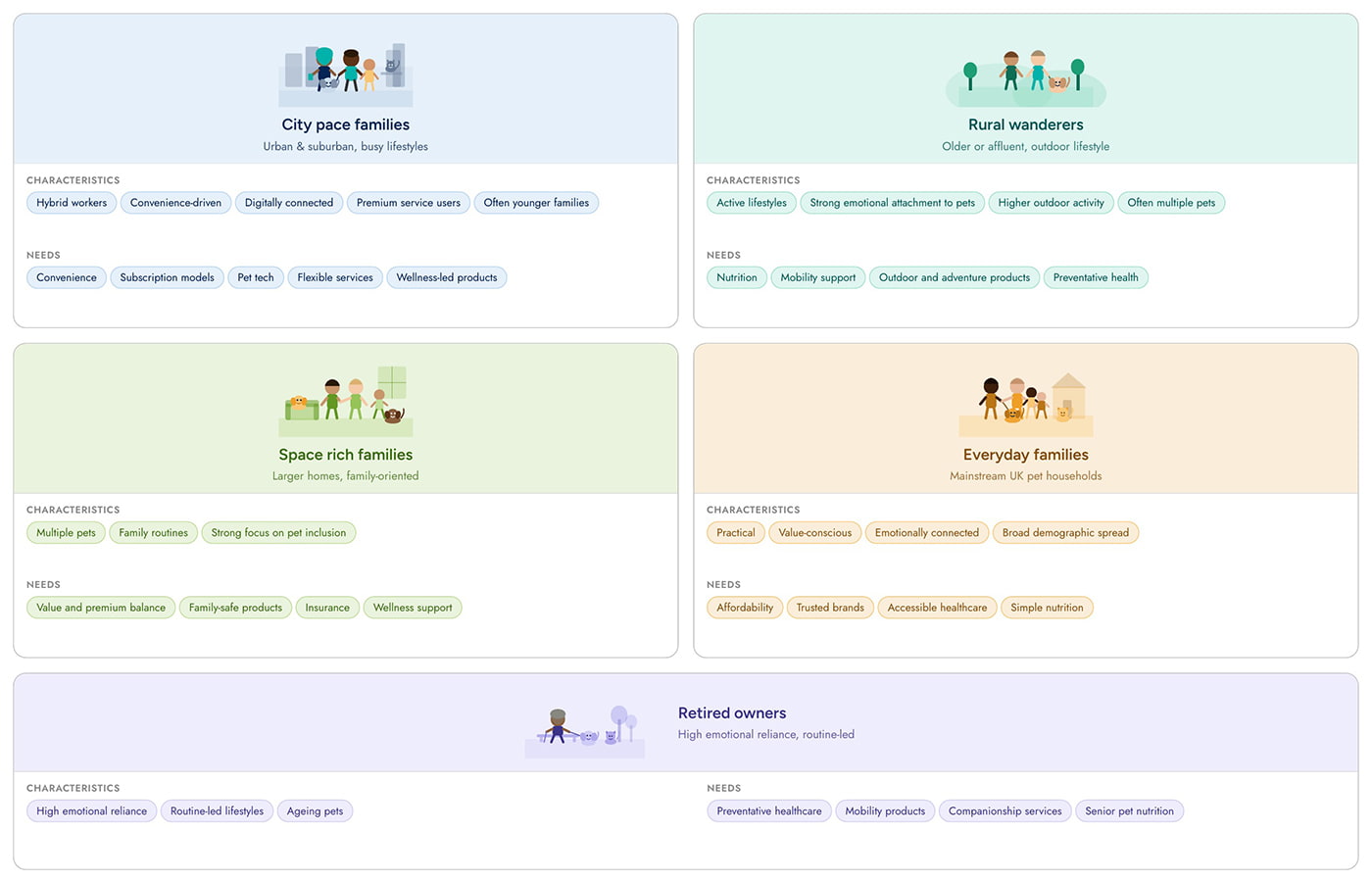
That growth is good news. But it also means the market pet brands are selling into today is not the one they built their strategies for a few years ago. PDV’s own analysis, drawn from first-party profiling of more than 3.3m UK pet households, found five distinct pet owner lifestyle segments sitting inside what many brands still treat as a single audience, each with different motivations, budgets and needs:
- City pace families
- Rural wanderers
- Space rich families
- Everyday families
- Retired owners
Understanding that shift is one thing, acting on it is another… Here are five things pet brands need to do to grow and retain customers in 2026 and beyond.
PDV's five pet owner personas
-
Stop targeting pet owners and start understanding pet lifestyles
The biggest opportunity in the pet market right now is recognising that ‘pet owner’ isn’t one audience. A hybrid-working urban dog parent, a retired couple with an ageing dog and a value-conscious family, with two children and a rescue cat, are all pet owners but they behave in completely different ways and respond to very different messages.
The brands succeeding today are using lifestyle, behavioural and emotional segmentation, not just species or breed, to shape messaging, product ranges and customer experience. Done well, this makes the customer feel understood rather than sold to, which is a far stronger foundation for loyalty.

-
Turn your customer data into decisions
Most pet businesses already hold remarkably rich data: breed, age, diet, routines, life stage, household composition… But few are using it to its full potential, instead defaulting to broad segmentation and mass-market messaging because that’s what the existing systems and habits support, not because it’s the best option.
The real question isn’t whether you understand the pet, it’s whether you understand the person behind the purchase decision, with the same depth. Enriching pet parent data, personalising journeys and anticipating what a customer will need next, rather than reacting after they’ve already gone looking for it elsewhere, is what turns a database into a growth engine.

-
Get ahead of financial pressure before you lose the customer
Pet owners are prioritising their pets more than ever but the cost of doing so is also rising. The PDSA Pet Health Inequality Report points to growing disparities in access to veterinary care, affordability and preventative treatment, and that pressure isn’t being felt equally across every customer segment.
Succeeding brands will be those that understand exactly where their customers are willing to spend, where they’re looking for more value and what kind of support helps them keep caring for their pet through a squeeze, rather than assuming premiumisation is the answer for everyone. Flexible pricing, subscriptions, loyalty schemes and value-led support all have a role to play in protecting trust and retention.

-
Own the wellness conversation
The wellness boom that’s reshaped human health and beauty markets has firmly arrived in the pet world. Gut health, functional nutrition, preventative care, mental stimulation and ingredient quality are no longer niche concerns, they’re now close to mainstream expectations, with 64% of pet owners planning to prioritise pet health and wellbeing this year.
This is an opportunity for brands willing to move beyond selling products to providing education, personalised nutrition and lifecycle-led support. The pet brands positioning themselves as trusted advisors are the ones building the kind of relationship that keeps a customer for the life of their pet, rather than just a single purchase.

-
Build community, not just a customer base
Pet ownership is deeply emotional and the strongest pet brands are starting to behave less like retailers and more like communities. Content, shared experience, storytelling and useful advice all build a sense of belonging that a discount code never will, and that sense of belonging is proving particularly powerful among younger owners, solo households and hybrid workers, exactly the groups driving much of the market’s recent growth.

Changing faces of pet ownership
The pet market has moved a long way from ‘pet products for pet owners’. It’s now a market built on wellbeing, companionship and identity, and the brands that understand the person behind the purchase, not just the animal, are the ones that’ll grow fast over the next few years.
This is the first blog in a short series looking at what’s driving change in the UK pet market and what it means for brands operating in it. For the full picture, including the full breakdown of PDV’s five pet owner personas and the data behind them, read our whitepaper: Changing faces of pet ownership – lifestyle, wellness and data reshaping the UK pet landscape.